
How Much Does a Commercial Kitchen Cost in Mumbai? Complete 2026 Guide
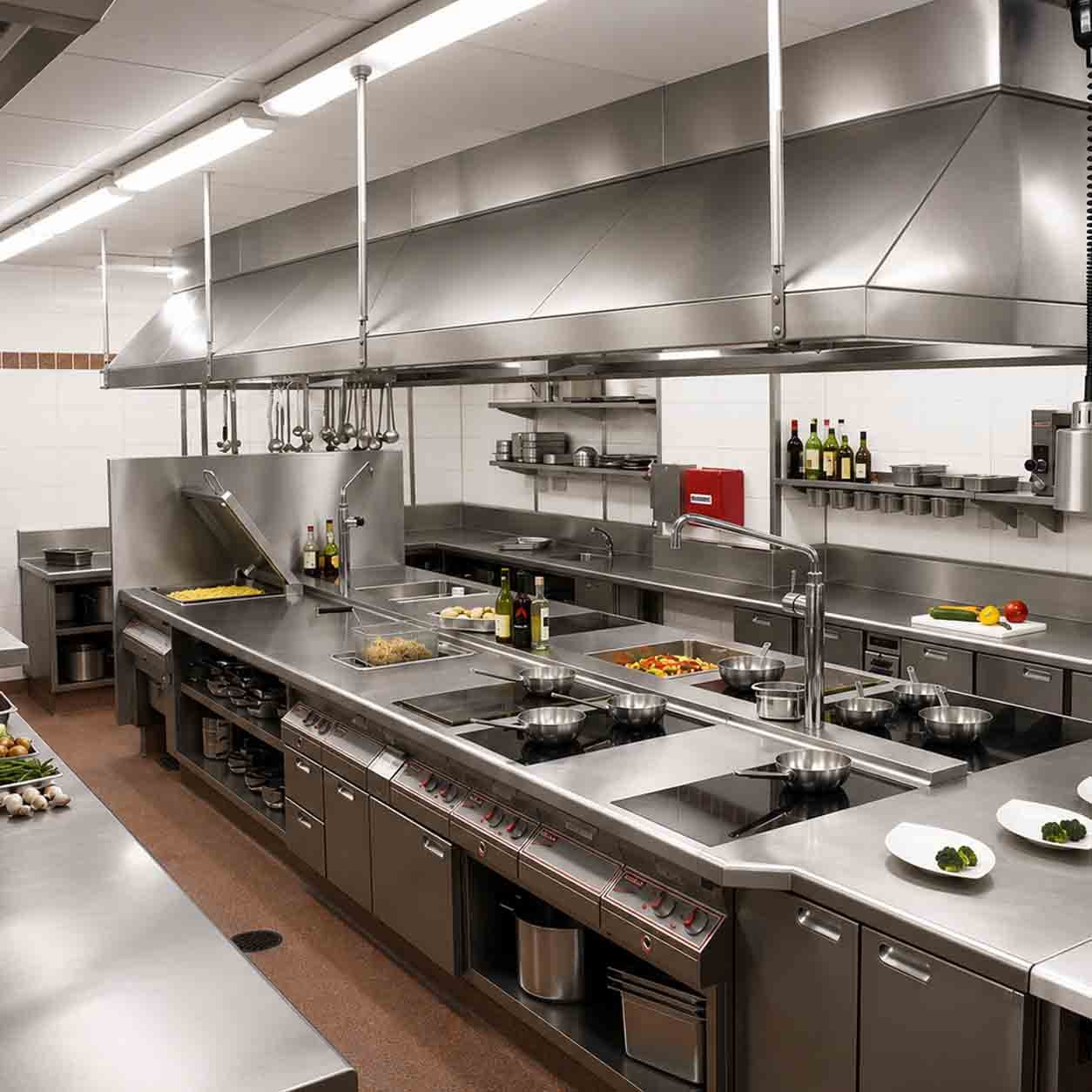


Starting a restaurant, hotel, café, cloud kitchen, bakery, catering business, canteen, or institutional food facility in Mumbai requires much more than purchasing cooking equipment. The commercial kitchen is the operational heart of a food business, and its design, equipment, ventilation, storage, utilities, and workflow can directly affect productivity and operating costs.
So, how much does a commercial kitchen cost in Mumbai in 2026?
There is no single fixed price because every commercial kitchen is different. A compact cloud kitchen may need a relatively modest investment, while a multi-cuisine restaurant, industrial canteen, hotel, or institutional kitchen can require a much larger budget.
As a broad planning estimate, a small commercial kitchen may start from around ₹8–20 lakh, while a mid-sized restaurant kitchen can commonly require around ₹20–40 lakh. Larger and more specialized projects can exceed ₹40 lakh, with large hotel and institutional kitchens potentially reaching ₹1 crore or more depending on their size, capacity, specifications, and scope of work.
These figures should be treated as indicative budgeting ranges rather than fixed market prices. The final commercial kitchen setup cost depends on your menu, kitchen size, production capacity, equipment selection, stainless-steel fabrication, refrigeration, exhaust system, electrical and plumbing requirements, installation, and civil work.
If you are planning a commercial kitchen in Mumbai, Hari Om Smart Kitchen can help you plan and develop a customized kitchen based on your available space, menu, operational requirements, and budget.
Commercial Kitchen Cost in Mumbai: 2026 Price Overview
Before going into individual components, it helps to understand the approximate investment required for different types of commercial kitchens.
| Type of Commercial Kitchen | Approximate Setup Budget |
|---|---|
| Small Café / Basic Kitchen | ₹8–20 lakh |
| Cloud Kitchen | ₹5–15 lakh+ |
| Small Restaurant Kitchen | ₹12–25 lakh+ |
| Mid-Sized Restaurant Kitchen | ₹20–40 lakh |
| Large / Multi-Cuisine Restaurant | ₹40 lakh+ |
| Industrial / Institutional Kitchen | ₹30 lakh–₹1 crore+ |
| Large Hotel Kitchen | ₹50 lakh–₹2 crore+ |
The wide range exists because equipment requirements vary considerably.
For example, a cloud kitchen specializing in a limited menu may only need a few cooking stations, refrigeration, preparation counters, storage, washing facilities, and an exhaust system. A hotel kitchen serving hundreds of guests, on the other hand, may require multiple cooking lines, bulk cooking equipment, cold storage, dishwashing systems, bakery equipment, specialized preparation areas, and extensive ventilation.
Therefore, the right question is not simply “What is the price of a commercial kitchen?” but “What commercial kitchen do I need for my business?”
What Is Included in a Commercial Kitchen Setup Cost?
A commercial kitchen budget generally consists of several different components. Looking only at the price of cooking equipment can result in a significantly underestimated project budget.
A professionally planned kitchen may include equipment, stainless-steel fabrication, refrigeration, ventilation, electrical work, plumbing, gas systems, civil work, installation, and commissioning.
Let's understand each component in detail.
1. Commercial Kitchen Equipment Cost
Cooking equipment is one of the most important investments in any commercial kitchen.
Depending on the type of food you serve, the kitchen may require cooking ranges, burners, ovens, fryers, grills, tandoors, steamers, hot plates, bulk cooking equipment, or other specialized machines.
The cost varies according to equipment size, material, fuel type, automation, capacity, brand, and construction quality.
For example, a restaurant with a menu focused primarily on Indian cuisine may require heavy-duty burners, tandoors, kadai cooking stations, fryers, and preparation equipment. A bakery will have a completely different equipment requirement, with ovens, mixers, proofers, refrigeration, and bakery-specific preparation equipment taking priority.
This is why buying equipment individually without first preparing a kitchen layout can result in unnecessary expenditure.
A better approach is to start with the menu and expected production volume, then select equipment accordingly.
2. Stainless-Steel Commercial Kitchen Fabrication
Stainless-steel fabrication is another major part of the commercial kitchen setup cost in Mumbai.
A professional kitchen needs much more than cooking machines. Employees require properly designed workstations for preparation, cooking, storage, washing, and service. Typical fabricated items include:
- Stainless-steel work tables
- Preparation counters
- Sink units
- Storage racks
- Wall shelves
- Cabinets
- Ingredient storage units
- Service counters
- Customized equipment tables
The fabrication specification can affect the overall cost considerably. Material grade, sheet thickness, dimensions, construction, welding quality, finish, and customization all influence the final price.
A well-fabricated kitchen should not only look professional but also withstand continuous commercial use.
For busy restaurants and food-service operations, the kitchen environment can involve heat, moisture, grease, cleaning chemicals, and heavy daily usage. Consequently, selecting appropriate materials and fabrication standards is an important long-term investment.
3. Commercial Kitchen Exhaust and Ventilation Cost
Ventilation is one of the most important systems in a commercial kitchen, yet it is often overlooked when calculating the initial budget.
Cooking generates heat, smoke, steam, grease, and odors. Without appropriate ventilation, these can accumulate inside the kitchen, creating an uncomfortable working environment and potentially affecting hygiene and safety.
A commercial exhaust system may include an exhaust hood, filters, ducting, exhaust fans, fresh-air provisions, and related electrical and installation work.
The final cost depends on the size of the cooking line, type of cooking equipment, duct length, building structure, outlet location, and ventilation requirements.
In Mumbai, where commercial properties can have challenging layouts and limited service routes, exhaust planning should ideally be completed during the kitchen-design stage.
A properly designed exhaust system can improve the working environment and help the kitchen operate more efficiently.
4. Refrigeration and Cold Storage
Refrigeration is another significant component of a commercial kitchen budget.
Restaurants, hotels, cafés, cloud kitchens, bakeries, and catering businesses need reliable temperature-controlled storage for ingredients and prepared food.
Depending on your operation, you may need upright refrigerators, under-counter refrigerators, deep freezers, chillers, refrigerated preparation counters, or larger cold-storage systems.
The right refrigeration capacity should be calculated based on:
- Daily food production
- Ingredient volume
- Menu
- Storage duration
- Delivery requirements
- Available kitchen space
- Expected business growth
Buying a refrigerator that is too small may create storage problems and operational inefficiencies. On the other hand, purchasing excessive refrigeration capacity increases the initial investment and operating costs.
A commercial kitchen consultant can help determine the appropriate refrigeration capacity for your actual production needs.
5. Electrical, Plumbing and Gas Infrastructure
A commercial kitchen is dependent on reliable utility infrastructure.
Your cooking and preparation equipment may require dedicated electrical points, heavy-duty connections, water supply, drainage, gas pipelines, and other utility provisions.
If the premises already has suitable infrastructure, the project may require relatively limited modifications.
However, if you are starting with an empty commercial space, additional electrical, plumbing, drainage, gas, and utility work can add significantly to the overall project cost.
This is another reason why the kitchen layout should be finalized before installation begins.
A properly planned layout allows utility points to be positioned according to the equipment rather than making expensive changes later.
6. Kitchen Installation and Commissioning
Equipment delivery is not the end of a commercial kitchen project.
Professional installation involves positioning equipment correctly, connecting utilities, checking clearances, integrating fabricated units, testing systems, and making sure the complete kitchen is ready for operation.
For a larger project, installation can involve coordination between several systems, including:
Kitchen equipment + fabrication + electrical + plumbing + gas + exhaust + drainage
A turnkey commercial kitchen solution can simplify this process because one project team coordinates the major components instead of the business owner managing multiple vendors separately.
Hari Om Smart Kitchen provides commercial kitchen solutions involving design, manufacturing, equipment supply, installation, and project support.
7. Civil Work and Flooring
Civil work can be another hidden component of your restaurant kitchen setup cost.
Depending on the condition of your premises, you may need flooring, drainage, waterproofing, wall finishing, plumbing modifications, partitions, electrical changes, or other construction work.
For example, an existing restaurant location may already have suitable drainage and utility points, whereas a newly constructed commercial property may require substantial infrastructure development.
This means two kitchens with exactly the same equipment can still have very different total project costs.
When preparing your budget, always ask whether a quotation includes civil, electrical, plumbing, gas, exhaust, installation, and other site-related work.
Commercial Kitchen Cost by Business Type
Different food businesses require different kitchen designs. Understanding this can help you create a more realistic budget.
Cloud Kitchen Setup Cost in Mumbai
Cloud kitchens generally have a strong focus on production efficiency and delivery.
Because customers do not dine inside the premises, the kitchen can concentrate on cooking, preparation, packing, storage, and dispatch.
A small cloud kitchen may therefore cost less than a conventional restaurant kitchen. However, the budget can increase significantly if the business operates multiple brands, has a large menu, or handles high order volumes.
A practical starting range can be around ₹5–15 lakh or more, depending on equipment and infrastructure.
The key is to design the kitchen around the expected order volume rather than simply choosing the cheapest equipment.
Restaurant Kitchen Setup Cost in Mumbai
A restaurant kitchen generally requires more extensive planning because it needs to support both food production and service operations.
A small restaurant may operate with a relatively compact kitchen, whereas a multi-cuisine restaurant needs separate preparation and cooking requirements.
A mid-sized restaurant kitchen can commonly require approximately ₹20–40 lakh, although the final cost can be significantly higher depending on the menu and specifications.
For a restaurant, kitchen workflow is particularly important. Ingredients should move logically from storage to preparation, cooking, plating, and service without creating unnecessary cross-traffic.
Hotel Kitchen Setup Cost
Hotel kitchens are usually among the most complex commercial kitchen projects.
Depending on the property, a hotel may require separate facilities for:
- Main kitchen
- Banquet kitchen
- Bakery
- Pantry
- Room service
- Specialty restaurants
- Staff dining
- Dishwashing
- Cold storage
Because of the scale and specialization involved, hotel kitchen costs can range from tens of lakhs to several crores.
The final budget depends heavily on the number of covers, number of outlets, menu, production volume, equipment specification, and level of automation.
Bakery Kitchen Setup Cost
Bakery kitchens require specialized equipment that differs from conventional restaurant kitchens.
A bakery may need commercial ovens, planetary mixers, dough kneaders, proofing systems, refrigeration, preparation tables, storage systems, and specialized bakery equipment.
The production model also matters. A small boutique bakery has very different requirements from a centralized bakery supplying several outlets.
Therefore, bakery kitchen costs should be calculated according to production capacity and product range.
How Much Does Commercial Kitchen Equipment Cost in Mumbai?
There is no standard price for commercial kitchen equipment because equipment comes in different capacities, configurations, materials, and specifications.
For example, a basic cooking range for a small kitchen will have a completely different price from a heavy-duty multi-burner cooking range designed for continuous high-volume production.
The same applies to refrigeration, ovens, fryers, exhaust systems, and preparation equipment.
Instead of comparing products purely by their purchase price, consider:
Initial cost + expected lifespan + energy consumption + maintenance + productivity
A cheaper machine may not necessarily be the cheaper option over five or ten years if it requires frequent repairs or cannot handle your production volume.
How to Calculate Your Commercial Kitchen Budget?
A simple way to begin is to divide your total budget into major categories. For a typical restaurant project, you may initially consider:
| Category | Approximate Share of Equipment & Kitchen Budget |
|---|---|
| Cooking Equipment | 20–30% |
| Stainless-Steel Fabrication | 15–20% |
| Refrigeration | 10–15% |
| Exhaust & Ventilation | 8–15% |
| Preparation Equipment | 5–10% |
| Electrical, Plumbing & Gas | 5–10% |
| Installation & Commissioning | 5–10% |
| Contingency | 5–10% |
These percentages are only for initial planning. They should not be treated as a fixed quotation formula.
For example, a bakery may spend a much higher percentage on ovens and mixers, while a cold-food production kitchen may allocate more of its budget toward refrigeration.
7 Factors That Can Increase Your Commercial Kitchen Cost
Your commercial kitchen budget may increase because of several factors.
- High Production Capacity: If your kitchen needs to prepare hundreds or thousands of meals daily, you will need larger-capacity equipment and greater storage.
- Large Menu: A multi-cuisine menu often requires more equipment because different cooking processes cannot always be handled efficiently on the same machines.
- Premium Equipment: Higher-end equipment can increase the initial investment but may offer better durability, productivity, energy efficiency, or automation.
- Complex Exhaust Requirements: Long duct routes, multiple cooking lines, difficult building layouts, or specialized ventilation requirements can increase the exhaust budget.
- New Infrastructure: If your premise does not have suitable electrical, plumbing, drainage, or gas infrastructure, additional work will be required.
- Customized Fabrication: Special dimensions, unusual layouts, custom cabinets, specialty counters, and customized equipment integration can increase fabrication costs.
- Difficult Site Conditions: Limited access, upper-floor installation, restricted working hours, or challenging duct routes can increase installation and logistics costs.
How to Reduce Commercial Kitchen Setup Cost Without Compromising Quality?
Reducing the cost of a commercial kitchen does not mean purchasing the cheapest equipment available. The better strategy is to eliminate unnecessary expenditure while investing appropriately in the equipment that directly affects your operation.
- Design Before You Buy: Never start by purchasing equipment randomly. First create the kitchen layout, understand the workflow, determine utility requirements, and then finalize the equipment list. This prevents the common problem of buying equipment that does not fit the available space.
- Choose Equipment According to Your Menu: A kitchen should be designed around what you actually cook. If a machine is not required by your menu or production process, purchasing it simply because it is available can unnecessarily increase your capital expenditure.
- Prioritize High-Use Equipment: Spend carefully on equipment that operates throughout the day. Reliable cooking equipment, refrigeration, preparation systems, and exhaust infrastructure can have a direct impact on daily productivity.
- Leave Room for Expansion: If you expect your restaurant or cloud kitchen to grow, consider future equipment requirements during the initial design. Planning expansion space in advance is usually easier and less expensive than rebuilding the kitchen later.
Why Professional Commercial Kitchen Design Matters?
A commercial kitchen should not be designed simply by placing equipment wherever there is available space.
The layout should consider how employees, ingredients, utensils, equipment, waste, and finished food move through the kitchen.
An effective kitchen design can help reduce unnecessary movement and improve productivity.
For example, the refrigerator should be positioned logically in relation to preparation areas. Preparation counters should be close to the relevant cooking stations, while washing and waste-management areas should be organized to reduce interference with food production.
A well-designed workflow can be broadly visualized as:
Receiving → Storage → Preparation → Cooking → Plating/Dispatch → Washing → Waste Management
The exact configuration will vary according to the business, but the objective remains the same: create a smooth, safe, hygienic, and efficient workflow.
This is where an experienced commercial kitchen manufacturer in Mumbai can add significant value.
Hari Om Smart Kitchen provides customized commercial kitchen planning and solutions for different food-service businesses, helping clients develop kitchens around their available space, menu, production requirements, and operational workflow.
Why Choose Hari Om Smart Kitchen for Your Commercial Kitchen in Mumbai?
Choosing the right commercial kitchen partner can have a long-term impact on your business.
Hari Om Smart Kitchen focuses on customized commercial kitchen solutions rather than treating every project as a standard package. The company caters to requirements across areas such as:
- Restaurants
- Hotels
- Cloud kitchens
- Bakeries
- Cafés
- Catering businesses
- Canteens
- Hospitals
- Institutional kitchens
- Food-service facilities
The advantage of working with a professional kitchen solution provider is that equipment, fabrication, layout, ventilation, utilities, and installation can be planned as part of one coordinated project.
For a business owner, this can make the process easier and help minimize coordination problems between multiple suppliers.
If you are looking for commercial kitchen equipment in Mumbai or planning a complete restaurant kitchen, visit Hari Om Smart Kitchen to explore commercial kitchen solutions and request project assistance.
What Should You Ask a Commercial Kitchen Manufacturer Before Ordering?
Before finalizing your commercial kitchen supplier, do not compare quotations based only on the final number. Ask what is included in the quotation. Important questions include:
- Is the kitchen layout included?
- Is the equipment list clearly specified?
- What stainless-steel grade is being used?
- Is fabrication included?
- Are exhaust hood and ducting included?
- Are electrical and plumbing requirements included?
- Is installation included?
- Are transportation and commissioning included?
- What warranty is provided?
- Is after-sales service available?
- Can the design be customized?
- Is future expansion considered?
A quotation that appears cheaper initially may not actually be cheaper if essential services are excluded.
A transparent quotation should clearly identify the scope of work.
Common Mistakes to Avoid When Setting Up a Commercial Kitchen
- Buying Equipment Before Designing the Layout: This is one of the most common mistakes. Equipment dimensions, utility requirements, ventilation, and workflow should be considered before purchasing.
- Focusing Only on Initial Price: The cheapest equipment may not provide the best long-term value. Consider durability, maintenance, energy consumption, capacity, and productivity.
- Underestimating Exhaust Requirements: Poor ventilation can negatively affect the kitchen environment and daily operations.
- Ignoring Storage: Insufficient storage creates clutter and can slow down preparation.
- Not Planning for Maintenance: Commercial kitchen equipment experiences heavy usage. Easy access for cleaning and servicing should therefore be considered during design.
- Designing Only for the Opening Day: Your kitchen should ideally support your expected business growth. Future capacity should be considered wherever practical.
A Practical 2026 Budgeting Strategy for Mumbai
If you are opening a new food business, begin by establishing three numbers:
- Minimum viable investment: What do you need to start operating?
- Ideal investment: What setup would provide the productivity and capacity you want?
- Future expansion budget: What equipment or infrastructure may be added later?
This approach prevents two opposite mistakes.
The first is overspending before the business has established demand.
The second is underinvesting in critical systems, which can result in expensive modifications later.
For most businesses, the objective should be to build a kitchen that is efficient, scalable, hygienic, durable, and financially sensible.
Final Verdict: What Is the Commercial Kitchen Cost in Mumbai in 2026?
The cost of a commercial kitchen in Mumbai can range from approximately ₹5 lakh for a basic small-scale setup to ₹1 crore or significantly more for large institutional, hotel, or industrial projects.
For many restaurant projects, a useful planning range is approximately ₹20–40 lakh for a mid-sized commercial kitchen, although your actual investment can be lower or considerably higher.
The final cost depends on:
- Kitchen size
- Food concept
- Menu
- Daily production
- Cooking equipment
- Refrigeration
- Stainless-steel fabrication
- Exhaust and ventilation
- Electrical and plumbing infrastructure
- Gas systems
- Civil work
- Installation
- Customization
- Equipment specifications
The most important thing to remember is that a commercial kitchen is an investment in your business's daily productivity.
A properly designed kitchen can improve workflow, reduce unnecessary movement, make better use of space, support hygiene, and help your team handle increasing order volumes.
Instead of choosing equipment first and trying to fit it into your premises, start with your menu, capacity, workflow, available space, and budget.
If you are planning a restaurant, hotel, cloud kitchen, bakery, café, catering facility, canteen, or institutional kitchen in Mumbai, connect with Hari Om Smart Kitchen for a customized commercial kitchen solution designed around your business requirements.
Plan your kitchen correctly today so that it can support your business tomorrow.
FAQ’s
The average commercial kitchen cost depends on the type and size of the business. A small setup may start around ₹5–10 lakh, while a mid-sized restaurant kitchen may require approximately ₹20–40 lakh. Large hotel, industrial, and institutional kitchens can require ₹50 lakh to ₹1 crore or more depending on capacity, equipment, infrastructure, and customization.
A complete commercial kitchen setup can include cooking equipment, refrigeration, stainless-steel fabrication, preparation equipment, storage, sinks, exhaust hoods, ducting, ventilation, electrical work, plumbing, gas systems, installation, and commissioning. The exact scope depends on the project and quotation.
Restaurant kitchen equipment does not have one fixed price. The cost depends on the number and type of equipment, capacity, material, brand, automation, and menu requirements. A professional equipment list should be prepared after evaluating the restaurant's menu, kitchen size, and expected production volume.
The best way to reduce costs is to design the kitchen before purchasing equipment, select equipment according to the actual menu, avoid unnecessary machines, optimize the workflow, and plan utilities correctly. Investing in durable, high-use equipment can also provide better long-term value than choosing products based only on the lowest purchase price.
A professional commercial kitchen manufacturer can coordinate layout, stainless-steel fabrication, equipment, ventilation, utilities, installation, and workflow as one integrated project. This can reduce coordination issues and help create a kitchen that is better suited to the available space and operational requirements. Hari Om Smart Kitchen provides customized commercial kitchen solutions for businesses in Mumbai and other locations.

