How to Set Up a Corporate Cafeteria Kitchen in Mumbai: Complete Equipment & Planning Guide


A well-planned corporate cafeteria is much more than a place where employees eat. It is a high-volume food service operation that needs to deliver speed, hygiene, consistency, safety, and cost efficiency every working day.
Whether you are setting up a cafeteria for a corporate office, IT park, industrial facility, business campus, or large workplace in Mumbai, the kitchen design and equipment selection can directly influence daily productivity and food-service quality.
The right corporate cafeteria kitchen setup in Mumbai should be designed around your menu, employee strength, meal volumes, available space, staff movement, storage requirements, utilities, and future expansion. This is where professional planning becomes important.
Hari Om Smart Kitchen specializes in commercial kitchen planning, manufacturing, equipment supply, and customized kitchen solutions for cafeterias, canteens, restaurants, hotels, cloud kitchens, hospitals, and other food-service operations. Its solutions focus on durable stainless-steel fabrication, efficient workflow, hygiene, and operational performance.
Let's explore how to plan a corporate cafeteria kitchen in Mumbai from the ground up.
Why Corporate Cafeteria Kitchen Planning Matters?
Corporate cafeterias can experience extremely high demand during short meal periods. Hundreds of employees may need breakfast, lunch, snacks, tea, coffee, or dinner within a limited time. An inefficient kitchen can result in:
- Long employee waiting times
- Slow food production
- Unnecessary staff movement
- Poor storage utilization
- Food-safety challenges
- Higher operating costs
- Equipment breakdowns
- Congested preparation areas
- Difficulty handling peak-hour demand
A professionally planned commercial cafeteria kitchen solves these problems by creating a logical flow from receiving and storage to preparation, cooking, holding, serving, washing, and waste management. The objective is simple: move food, people, utensils, and materials through the kitchen with minimum unnecessary movement.
Step 1: Determine Your Cafeteria's Capacity
Before purchasing any equipment, determine how much food your cafeteria will produce. Start by estimating:
- Total employees using the cafeteria
- Expected daily meal count
- Peak-hour customers
- Number of meals served simultaneously
- Breakfast requirements
- Lunch requirements
- Snack and beverage requirements
- Menu variety
- Number of kitchen employees
- Required food production capacity
For example, a cafeteria serving several hundred employees during a short lunch window requires a very different setup from a small office cafeteria. Capacity planning helps determine the appropriate size and quantity of:
- Cooking equipment
- Refrigeration units
- Preparation tables
- Storage racks
- Food holding equipment
- Serving counters
- Washing stations
Avoid buying equipment based only on available floor space. Production requirements should drive equipment selection.
Step 2: Plan the Corporate Cafeteria Kitchen Layout
A smart kitchen layout is one of the most important parts of a successful cafeteria project. Hari Om Smart Kitchen emphasizes customized commercial kitchen layouts designed around workflow, space utilization, and operational requirements. A typical corporate cafeteria kitchen can be divided into the following zones:
1. Receiving Area
This is where raw materials, groceries, vegetables, dairy products, packaging materials, and other supplies enter the kitchen. The receiving area should allow easy inspection, weighing, unloading, and movement toward storage.
2. Dry Storage
Dry ingredients such as rice, flour, pulses, spices, packaged foods, and other non-perishable products should have an organized storage area. Use durable shelving and racks to keep ingredients accessible and protected.
3. Cold Storage
Commercial refrigerators and freezers are essential for storing perishable ingredients. Depending on the menu and production volume, a cafeteria may require dedicated refrigeration for vegetables, dairy, meat, prepared food, and other temperature-sensitive products.
4. Preparation Area
This section should include stainless-steel preparation tables, sinks, cutting equipment, food processors, mixers, grinders, and other food-preparation tools. Keep raw-material preparation logically separated from cooked-food handling wherever practical.
5. Cooking Area
The cooking section is the heart of the cafeteria kitchen. Equipment may include:
- Commercial cooking ranges
- Heavy-duty burners
- Bulk cooking equipment
- Fryers
- Griddles
- Steam cooking equipment
- Rice cooking equipment
- Tandoors, where required
- Ovens
- Tilting boiling pans
The exact equipment list should depend on the cafeteria menu and daily production volume.
6. Food Holding Area
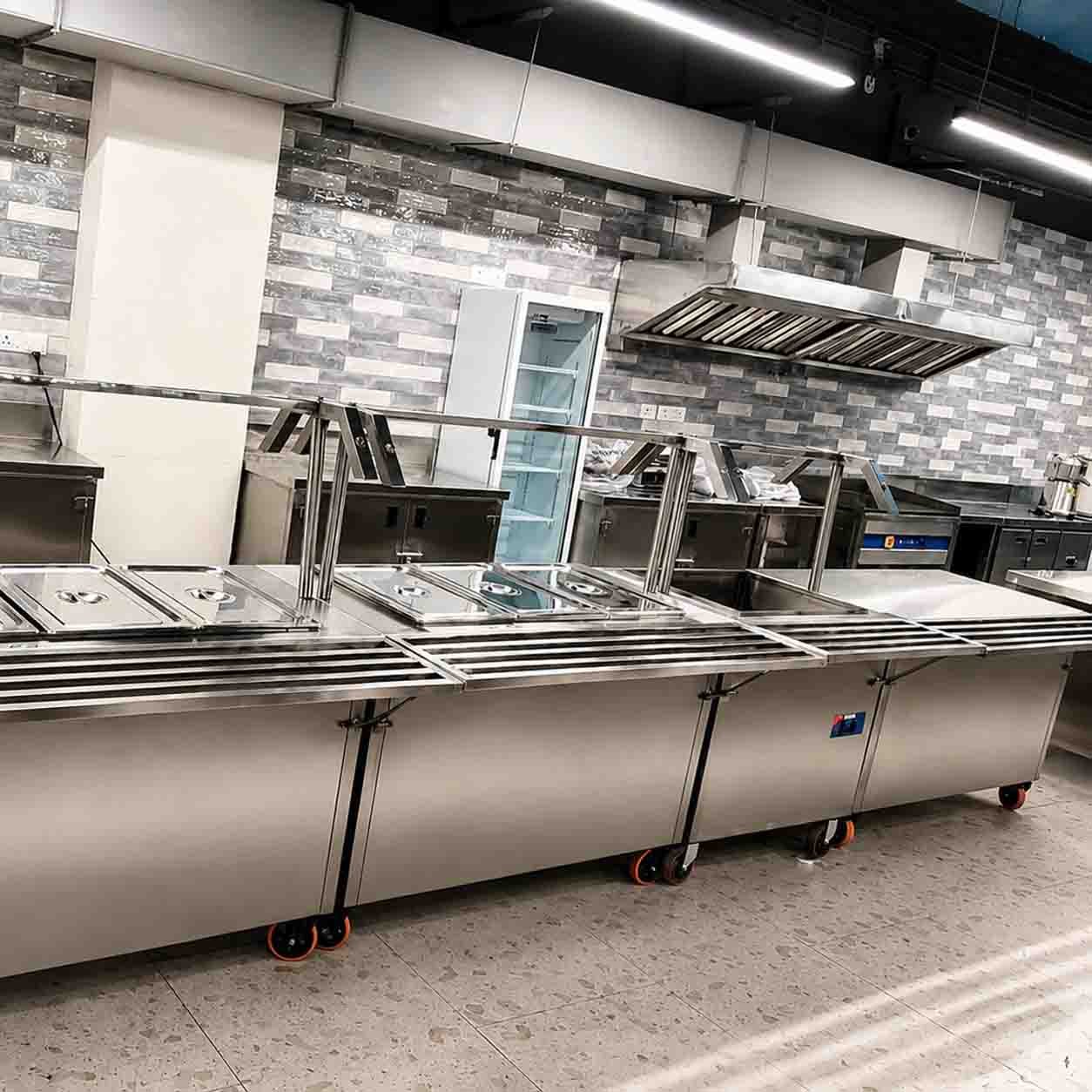
Food holding becomes especially important when meals need to remain ready for staggered serving. Bain-marie counters, hot food holding equipment, and suitable serving systems can help maintain an organized food-service operation.
7. Serving Area
The serving line should be positioned to minimize congestion. Depending on the cafeteria concept, the service area may include:
- Bain-marie counters
- Buffet counters
- Food display counters
- Beverage stations
- Cutlery stations
- Plate collection areas
8. Dishwashing and Pot-Wash Area
Used plates, vessels, cookware, and utensils should move toward the washing area without interfering with food preparation. Separate dirty and clean flows wherever possible to improve hygiene and operational efficiency.
Step 3: Select the Right Corporate Cafeteria Kitchen Equipment
Equipment selection should never be based solely on price. The right equipment should match your menu, capacity, space, workflow, energy requirements, durability expectations, and maintenance needs. A corporate cafeteria kitchen equipment checklist may include:
Commercial Cooking Equipment
Depending on the menu, consider:
- Commercial gas ranges
- Heavy-duty burners
- Fryers
- Griddles
- Ovens
- Steamers
- Rice boilers
- Bulk cooking systems
- Chapati-making equipment
- Tandoors
For high-volume operations, equipment should be selected according to expected production rather than minimum requirements.
Food Preparation Equipment
Food preparation equipment can significantly reduce manual work and improve consistency. Common options include:
- Vegetable cutters
- Mixers
- Grinders
- Dough kneaders
- Food processors
- Slicers
- Stainless-steel preparation tables
Hari Om Smart Kitchen lists food-processing and commercial kitchen solutions designed for demanding food-service environments.
Commercial Refrigeration
A corporate cafeteria needs reliable refrigeration to manage daily ingredients and prepared food. Depending on requirements, consider:
- Commercial refrigerators
- Deep freezers
- Chillers
- Reach-in refrigerators
- Under-counter refrigeration
- Cold-storage solutions
Refrigeration capacity should be calculated according to purchasing frequency, menu requirements, storage duration, and peak production.
Stainless-Steel Workstations
Stainless-steel fabrication is widely used in professional kitchens because it supports durability, cleaning, and organized food preparation. Important fabricated items include:
- Work tables
- Preparation counters
- Storage racks
- Wall shelves
- Sink units
- Cabinets
- Utility tables
- Trolleys
Hari Om Smart Kitchen focuses on stainless-steel commercial kitchen fabrication and customized solutions for demanding food-service operations.
Step 4: Install Proper Kitchen Exhaust and Ventilation
Ventilation should be considered during the design stage—not as an afterthought. Cooking produces heat, smoke, grease, steam, and odours. An appropriately designed exhaust system helps create a more comfortable and functional working environment. A commercial cafeteria kitchen may require:
- Exhaust hoods
- Ducting
- Exhaust fans
- Fresh-air provisions
- Grease filtration
- Appropriate ventilation planning
The exhaust system should be designed according to the cooking equipment, kitchen size, heat load, and building conditions. Hari Om Smart Kitchen offers commercial exhaust hood and ventilation solutions as part of its kitchen equipment range.
Step 5: Plan Gas, Electrical, Water and Drainage Requirements
A corporate kitchen requires proper utility planning. Before installation, identify the requirements for:
Gas
Plan gas lines, regulators, safety provisions, and equipment connections according to the selected cooking equipment and applicable requirements.
Electricity
High-powered commercial equipment may require dedicated electrical circuits and suitable load capacity.
Water
Plan adequate water supply for:
- Food preparation
- Cooking
- Dishwashing
- Pot washing
- Cleaning
- Handwashing
Drainage
Proper drainage is critical in a commercial kitchen. Floor drainage and wastewater flow should be planned to support regular cleaning and prevent water accumulation.
Professional commercial kitchen consultants can help coordinate these requirements before equipment installation. Hari Om Smart Kitchen describes its consulting services as covering kitchen planning, equipment selection, workflow optimization, utility planning, and project coordination.
Step 6: Prioritize Hygiene and Food Safety
Corporate cafeterias serve large numbers of people, making hygiene a fundamental design consideration. Your kitchen should support:
- Easy-to-clean surfaces
- Organized food storage
- Separate work zones
- Proper handwashing facilities
- Safe food handling
- Effective waste management
- Regular equipment cleaning
- Appropriate ventilation
- Smooth dirty-to-clean workflow
Stainless-steel work surfaces, racks, sinks, and counters can help create a durable and maintainable professional kitchen environment.
The design should also account for applicable food-safety, fire-safety, building, electrical, gas, and local regulatory requirements. Requirements can vary depending on the property and operation, so businesses should verify applicable approvals with the relevant authorities and qualified professionals.
Step 7: Design for Peak-Hour Efficiency
This is one of the biggest differences between an ordinary kitchen and a high-performing corporate cafeteria. Imagine 300 employees arriving for lunch within 30 minutes. If the kitchen is poorly designed, bottlenecks can appear everywhere. To improve peak-hour performance:
- Keep frequently used equipment close to preparation areas.
- Minimize unnecessary staff movement.
- Create organized food-production stations.
- Use appropriately sized cooking equipment.
- Design serving counters for fast movement.
- Provide adequate holding capacity.
- Separate clean and used utensils.
- Maintain sufficient storage near workstations.
The goal is to make the kitchen fast without making it chaotic.
Step 8: Don't Forget Storage and Material Handling
Storage is often underestimated during cafeteria planning. A professional kitchen requires storage for both ingredients and operational supplies. Consider:
- Dry storage racks
- Ingredient bins
- Refrigerated storage
- Freezer storage
- Utensil storage
- Crockery storage
- Cleaning-supply storage
- Packaging storage
- Waste segregation areas
Trolleys and suitable material-handling equipment can also reduce unnecessary carrying and improve staff productivity.
Step 9: Create a Practical Equipment Budget
Your cafeteria kitchen budget should cover more than cooking machines. Consider the complete project cost, including:
- Kitchen design and planning
- Stainless-steel fabrication
- Cooking equipment
- Food-preparation equipment
- Refrigeration
- Exhaust and ventilation
- Storage systems
- Washing systems
- Serving counters
- Utilities and installation
- Safety provisions
- Transportation
- Maintenance and after-sales support
A cheaper equipment list may not always be the most economical solution. Instead, evaluate total cost of ownership—including durability, energy use, maintenance, downtime, replacement requirements, and operational efficiency.
Step 10: Work With a Professional Commercial Kitchen Partner
Planning a corporate cafeteria from scratch can involve multiple decisions, suppliers, technical requirements, and installation stages. Working with an experienced commercial kitchen company can simplify the process.
Hari Om Smart Kitchen provides customized commercial kitchen solutions for cafeterias, canteens, restaurants, hotels, hospitals, cloud kitchens, and other food-service facilities. Its services include kitchen planning, customized equipment, stainless-steel fabrication, equipment selection, and project support.
The company positions its solutions around customized layouts, premium equipment, practical functionality, and after-sales support.
For businesses looking for commercial kitchen equipment manufacturers in Mumbai, choosing a partner capable of handling planning, manufacturing, supply, and installation can make the project more coordinated.
Corporate Cafeteria Kitchen Equipment Checklist
Before finalizing your project, review this basic checklist:
| Checklist Item | Status |
|---|---|
| Capacity and meal volume calculated | ☐ |
| Menu finalized | ☐ |
| Kitchen layout prepared | ☐ |
| Receiving area planned | ☐ |
| Dry storage planned | ☐ |
| Commercial refrigeration selected | ☐ |
| Preparation equipment selected | ☐ |
| Cooking equipment selected | ☐ |
| Exhaust and ventilation planned | ☐ |
| Washing area designed | ☐ |
| Serving counter planned | ☐ |
| Gas requirements assessed | ☐ |
| Electrical load assessed | ☐ |
| Water and drainage planned | ☐ |
| Waste management area included | ☐ |
| Hygiene workflow reviewed | ☐ |
| Safety requirements reviewed | ☐ |
| Installation schedule prepared | ☐ |
| Maintenance requirements considered | ☐ |
| Future expansion considered | ☐ |
Why Choose Hari Om Smart Kitchen for a Corporate Cafeteria in Mumbai?
Choosing the right kitchen partner can make the difference between a kitchen that simply fits into a space and one that actually supports efficient food production.
Hari Om Smart Kitchen offers customized commercial kitchen solutions with a focus on workflow, durability, stainless-steel fabrication, and operational efficiency. The company serves a range of food-service applications, including corporate cafeterias and industrial canteens. Its capabilities include:
- Customized commercial kitchen layouts
- Commercial kitchen equipment
- Canteen kitchen equipment
- Commercial refrigeration
- Exhaust and ventilation solutions
- Stainless-steel fabrication
- Kitchen consulting
- Equipment selection
- Installation and project support
Whether you are developing a new corporate cafeteria or upgrading an existing kitchen, a customized approach can help you make better use of your available space while preparing for current and future food-service requirements.
Final Thoughts
Setting up a corporate cafeteria kitchen in Mumbai requires much more than purchasing commercial cooking equipment. The kitchen needs to function as a coordinated production system where storage, preparation, cooking, holding, serving, washing, ventilation, utilities, and staff movement work together.
Start with your meal capacity and menu, develop the workflow, plan each kitchen zone, select appropriately sized equipment, and consider hygiene, ventilation, utilities, safety, maintenance, and future expansion before finalizing the project.
A professionally designed cafeteria kitchen can improve productivity, reduce operational bottlenecks, support consistent food quality, and create a better experience for both kitchen staff and employees.
If you are planning a new corporate cafeteria, industrial canteen, or institutional kitchen in Mumbai, Hari Om Smart Kitchen can help you move from concept and layout planning to customized commercial kitchen equipment and project execution.
Ready to plan your corporate cafeteria kitchen? Contact Hari Om Smart Kitchen for a customized commercial kitchen solution designed around your space, menu, capacity, and workflow.
FAQ’s
A corporate cafeteria generally requires commercial cooking equipment, food-preparation machines, refrigerators/freezers, stainless-steel workstations, storage racks, exhaust and ventilation systems, washing stations, food-holding equipment, and serving counters. The exact equipment depends on the menu, employee capacity, and daily meal volume.
Start by determining the number of employees served, peak meal volumes, menu, available space, workflow, storage needs, and utility requirements. Then develop separate zones for receiving, storage, preparation, cooking, holding, serving, washing, and waste management.
Stainless steel is durable, practical for professional food-service environments, easy to maintain, and suitable for worktables, counters, sinks, racks, and storage systems. It is widely used for commercial kitchen fabrication.
Select equipment according to menu requirements, production capacity, available space, workflow, energy requirements, durability, maintenance, and future expansion. Avoid choosing equipment solely on the basis of initial purchase price.
Yes. Hari Om Smart Kitchen provides customized commercial kitchen planning and equipment solutions for cafeterias, canteens, restaurants, hotels, hospitals, cloud kitchens, and other food-service operations. Its consulting approach covers areas such as layout planning, workflow optimization, equipment selection, and project coordination.

